4个文件搞定详细设计:最小上下文集合实践
TL;DR
本文核心观点:
- 传统 artifacts 全部 AI 化是陷阱 — 把传统软件工程文档全部”AI 化”,结果必然是维护成本极高、AI 并不真正使用,很快变成”AI 版传统文档地狱”。
- 最小设计集合只需 4 个 artifacts —
intent.md(目标)、domain.md(领域模型)、api.yaml(接口契约)、constraints.md(约束),足以驱动代码生成、测试生成和 PR review。- 信息密度 > 文档数量 — 4 个文件、200 行结构化定义,比 20 页自然语言设计文档更有价值。机器可读性是 AI-Native 设计的第一原则。
- 简单是终极的复杂 — 删除 Sequence Diagram、Behavior Spec、Architecture Doc,只保留 AI 必须依赖的最小上下文集合。
4个文件搞定详细设计:最小上下文集合实践
很多人在设计 AI-Native SDLC artifacts 时犯一个典型错误:把传统软件工程的所有设计文档”AI化”。
结果是:
- Artifacts 太多,维护成本极高
- AI 也不会真正使用
- 很快变成”AI 版传统文档地狱”
真正有效的做法是:只保留 AI 必须依赖的最小设计集合(Minimal Context Set)。
💡 Key Insight
最小设计集合(Minimal Context Set)的本质是把 AI 的注意力当作稀缺资源——只提供 AI 必须依赖的信息,多余的文档只会稀释关键信号。
核心结论
如果目标是:
- AI 可以稳定写代码
- 人类可以 review
- 工程成本最低
那么最小设计集合只有 4 个 artifacts:
这四个已经足够驱动:代码生成、测试生成、PR review。
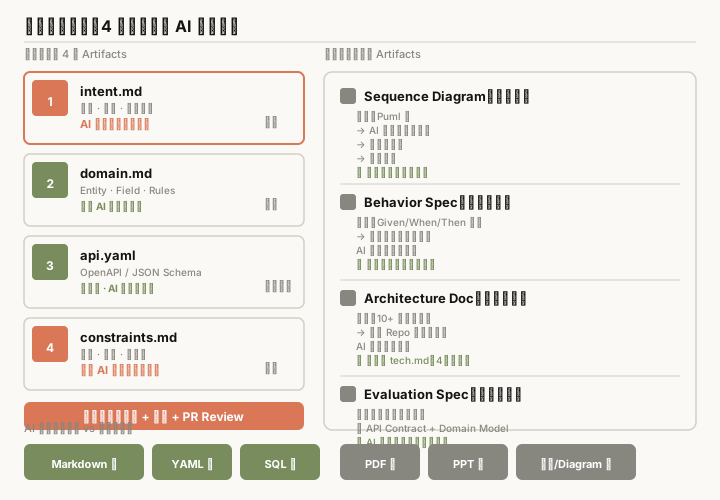
为什么是这四个?
💡 Key Insight
这四个 artifacts 足够驱动:代码生成、测试生成、PR review。它们覆盖了 AI 软件工程最核心的上下文需求。
1. Intent(必须)
文件: intent.md
作用: 让 AI 知道为什么要做这个功能。
如果没有 Intent:
- AI 会过度实现
- 功能方向错误
- 设计不符合产品目标
Intent 是 AI 软件工程的北极星。
💡 Key Insight
Intent 是 AI 软件工程的北极星。没有 Intent,AI 只是在写代码,不是在实现产品目标——方向错误是 AI 软件工程最隐蔽也最昂贵的风险。
2. Domain Model(必须)
文件: domain.md
作用: 定义业务对象,划定边界。
如果没有 Domain Model:
- AI 会”发明”实体
- 随意添加字段
- 创造不存在的关系
3. API Contract(强烈建议)
文件: api.yaml
作用: 结构化接口定义。
AI 会自动生成:Controller、Client、测试用例。
如果没有 API Contract:
- API 结构不一致
- Request/Response 设计混乱
- 前后端对接成本高
4. Constraints(必须)
文件: constraints.md
作用: 明确 AI 必须遵守的边界。
如果没有 Constraints:
- AI 写出简单但不可用的代码
- 不考虑安全
- 不考虑性能
- 不考虑并发
哪些传统 artifacts 可以删除?
💡 Key Insight
很多传统设计 artifact 其实完全可以删除。AI 更容易理解具体例子和结构化定义,而非抽象描述和图形。
1. Sequence Diagram(可以删)
传统: sequence-diagram.puml
AI 时代的问题:
- AI 解析图形能力弱
- 维护成本高
- 容易过期
替代方案: 用文字场景描述
2. Behavior Spec(大部分可以删)
传统: behavior.md
现实: 很多行为其实测试用例就可以表达。
AI 更容易理解具体例子,而非抽象描述。
3. Architecture Doc(大部分可删)
传统: architecture.md (10+ pages)
现实: 如果系统已有 Repo 结构、框架、依赖,AI 通常已经能理解。
只需要一个简单的:
4. Evaluation Spec(可删)
传统: evaluation.md
现实: 只要有 API Contract 和 Domain Model,AI 可以直接生成测试。
不需要单独写评估规格。
AI 喜欢什么样的 artifacts?
| 格式 | 示例 | 原因 |
|---|---|---|
| Markdown | intent.md | 语义清晰 |
| YAML | api.yaml | 结构化 |
| SQL | schema.sql | 明确无歧义 |
Markdown(如 intent.md)之所以是 AI 最喜欢的格式之一,是因为它的语义结构清晰。标题、列表、代码块、引用——这些格式标记本身就是一种上下文提示,帮助 AI 理解信息层级和逻辑关系。# 标题 表示主题,## 小节 表示子主题,- 列表项 表示并列表述。这种结构不需要额外的解析器,AI 直接从标记本身读取组织逻辑。
YAML(如 api.yaml)的优势在于它的类型安全性和无歧义性。YAML 的标量、映射、序列结构与编程语言的数据结构天然对应。AI 看到 status: integer 就知道这是整型,看到 items: [] 就知道这是数组。类型明确、嵌套关系清晰,AI 生成的代码自然与定义保持一致,不容易出现”理解了意思但写错了类型”的问题。
SQL(如 schema.sql)的优势与 YAML 类似:它是机器可读的领域定义语言。表结构、字段类型、约束条件、索引——这些信息以标准化语法表达,AI 可以直接从中推导出数据访问层代码。SQL 的关键字(PRIMARY KEY、NOT NULL、FOREIGN KEY)本身就是业务规则的精确表达。
AI 最不喜欢的格式是 PDF、PPT 和图片/Diagram,原因是这些格式没有可解析的 AST(抽象语法树)。PDF 里的文字是一个像素矩阵,AI 需要 OCR + 语义理解才能提取信息,而且提取后丢失了原始结构。PPT 的问题类似:文字分布在不同的 slide 和文本框里,逻辑关系需要人工推断。Sequence Diagram 这类图形更糟糕——节点和边的空间位置隐含语义,但 AI 很难可靠地还原这些关系。相比之下,Markdown、YAML、SQL 都是纯文本、结构化、可直接解析的格式,AI 处理它们的准确率远高于图像类格式。
三个 AI-Native 设计原则
💡 Key Insight
未来设计遵循三个原则:Context Density(上下文密度)、Machine Readability(机器可读性)、Drift Resistance(抗漂移)。简单是终极的复杂。
1. Context Density(上下文密度)
不是文档越多越好,而是信息密度越高越好。一份 20 页的设计文档,真正对 AI 有价值的信息可能只有 3 段;4 个结构化文件、200 行精确定义,反而能让 AI 直接执行。这背后的原因很简单:AI 处理信息的注意力是有限的。当文档长度增加但有效信息不增加时,AI 的注意力会被稀释,关键约束和业务规则淹没在冗余描述里。Context Density 的本质是把 AI 的注意力当作稀缺资源,只把必须知道的信息塞进去。正例:4 个文件、200 行、每个字符都是必要信息。❌ 反例:20 页文档,核心规则藏在第 15 页的第三段里。
2. Machine Readability(机器可读性)
设计必须满足三个条件:结构清晰(格式一致、层次分明)、规则明确(条件判断非模糊语言)、无歧义(同一表述不会产生两种理解)。结构化格式(YAML、SQL、JSON Schema)天然满足这三个条件,因为它们的语法本身就是规格说明。相比之下,自然语言的描述充满歧义——”通常情况下”、”一般而言”、”优先考虑”——这些词在人类交流中可接受,对 AI 来说却是精确执行的敌人。Machine Readability 还意味着设计产出的格式可以直接作为工具输入:YAML 被 API 工具直接消费,SQL Schema 被 ORM 直接使用,Markdown 被 LLM 直接读取。设计如果能做到”所见即所得”,AI 就能直接执行而无需额外转换。
3. Drift Resistance(抗漂移)
设计必须不会很快过期。API Contract(接口定义)是 Drift Resistance 最好的例子:一旦接口稳定,业务逻辑围绕它构建,接口本身不需要频繁改动。而 Sequence Diagram 是 Drift Resistance 最差的例子:随着代码演进,节点和边的实际关系早已改变,图形却很少同步更新,最终 Diagram 变成误导而非指导。Drift Resistance 高的设计还有一个特征:它的维护动机来自业务变化,而不是实现变化。业务需求变了,Intent 和 Domain Model 需要更新;但只要接口契约不变,API Contract 就不需要动。这种分离使得维护成本大幅降低。
更激进的极简:三文件实践
很多 AI 团队甚至只保留 3 个文件:
然后让 AI 生成:
- Schema
- Tests
- Implementation
实践建议
如果你想实践 AI-Native SDLC,从这个最小集合开始:
不要超过 4 个 artifacts。
否则很快就会变成:AI 版传统文档地狱。
终极形态:单文件系统
未来 AI-Native SDLC 可能变成单文件:
AI 直接生成整个系统。
💡 Key Insight
当 AI 能直接从 Intent 生成整个系统时,设计文档的形态也将随之消解——最小设计集合的终极形态是”无设计”,前提是 AI 的上下文窗口和推理能力足够强大。
总结
AI-Native 详细设计的关键是极简:
- 只保留必要 —— 4 个 artifacts 足够
- 删除可选 —— Sequence diagram、Architecture doc 可以去掉
- 追求密度 —— 信息密度 > 文档数量
- 机器优先 —— 结构 > 描述,代码 > 图形
记住:简单是终极的复杂。
深度阅读时间:约 8 分钟
下一篇:《增量需求不再头疼:Delta Specification 工作流》
💬 评论
💡 使用 GitHub 账号登录 即可参与讨论